Case studies
Developing GIS System for District Heating in Krakow, Poland
Client

Industry
Region
Technology
Overview
Client: Miejskie Przedsiębiorstwo Energetyki Cieplnej w Krakowie
District heating is one of the most economically and environmentally efficient methods of heat and hot water distribution in urban areas. It helps to reduce air pollution and the risk of carbon monoxide poisoning. We are pleased that our home city – Kraków – is among the national leaders in the field of district heating expansion and modernization, and we are proud to contribute to this progress by providing GIS solutions and services to MPEC S.A. for several years.
MPEC S.A. in Kraków has been systematically expanding its geoinformation system, and through that continuously improving the quality and efficiency of its network management. Following the implementation of a GIS system based on ESRI solutions – a project entrusted to our company several years ago – and our subsequent upgrades, version enhancements, development of a network management dashboard, and ongoing maintenance services, we have now undertaken the expansion of the Electrical Portal.
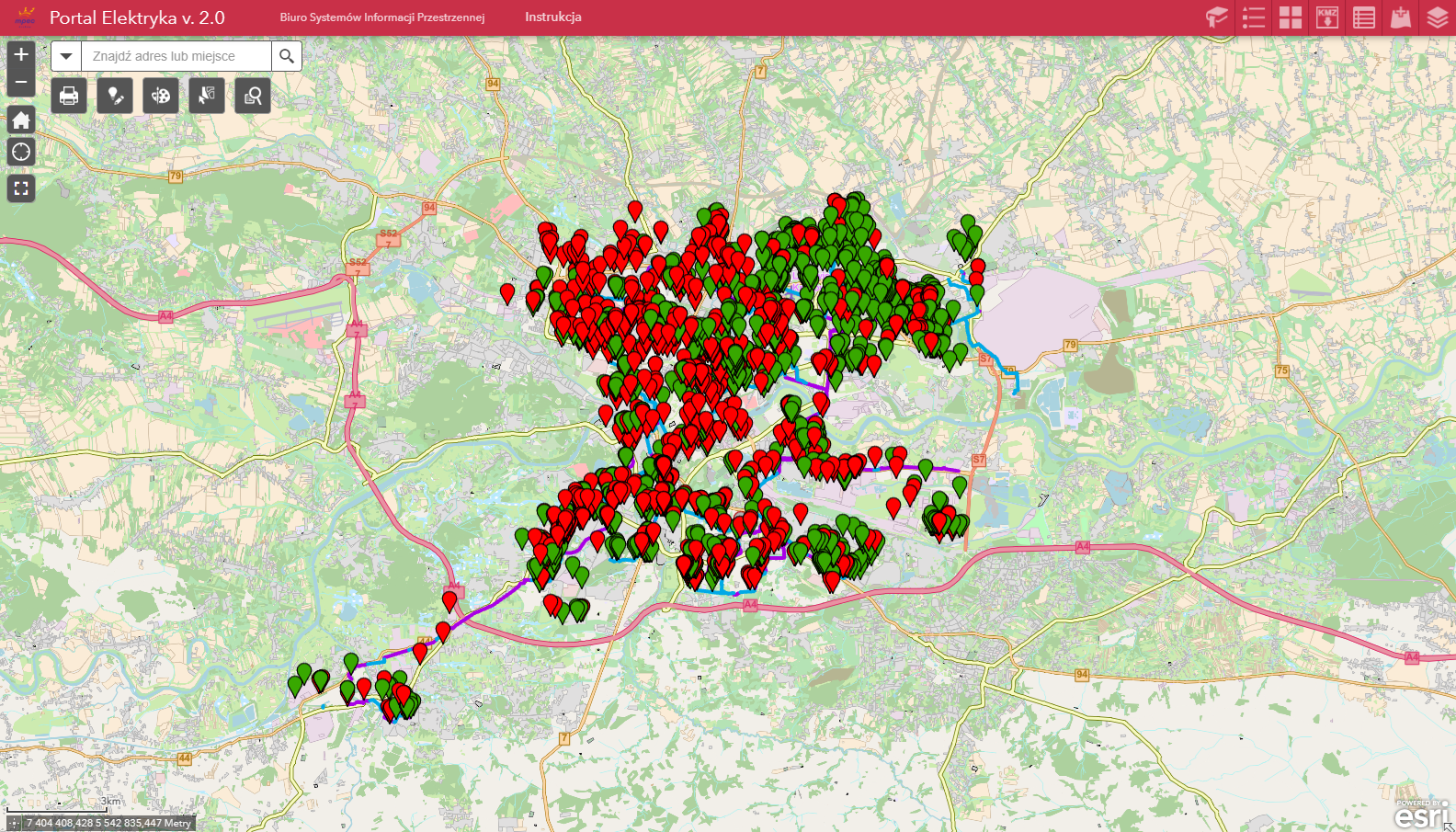
The Electrical Portal evolved from the concept of an application originally titled “Failures in Pre-insulated Networks“. It is dedicated to MPEC specialists responsible for monitoring the condition of pre-insulated pipes, based on a network of electronic sensors used to detect leaks.
As of 2025, the district heating network in Kraków extends nearly 1,000 km, with approximately 70% consisting of modern pre-insulated pipelines. Since pre-insulated pipes are a more efficient method of heat transfer compared to traditional solutions, both their share and total length are expected to continue increasing. Consequently, rapid response to potential failures and malfunctions is a task of critical—and steadily growing—importance.
Outcome & Impact
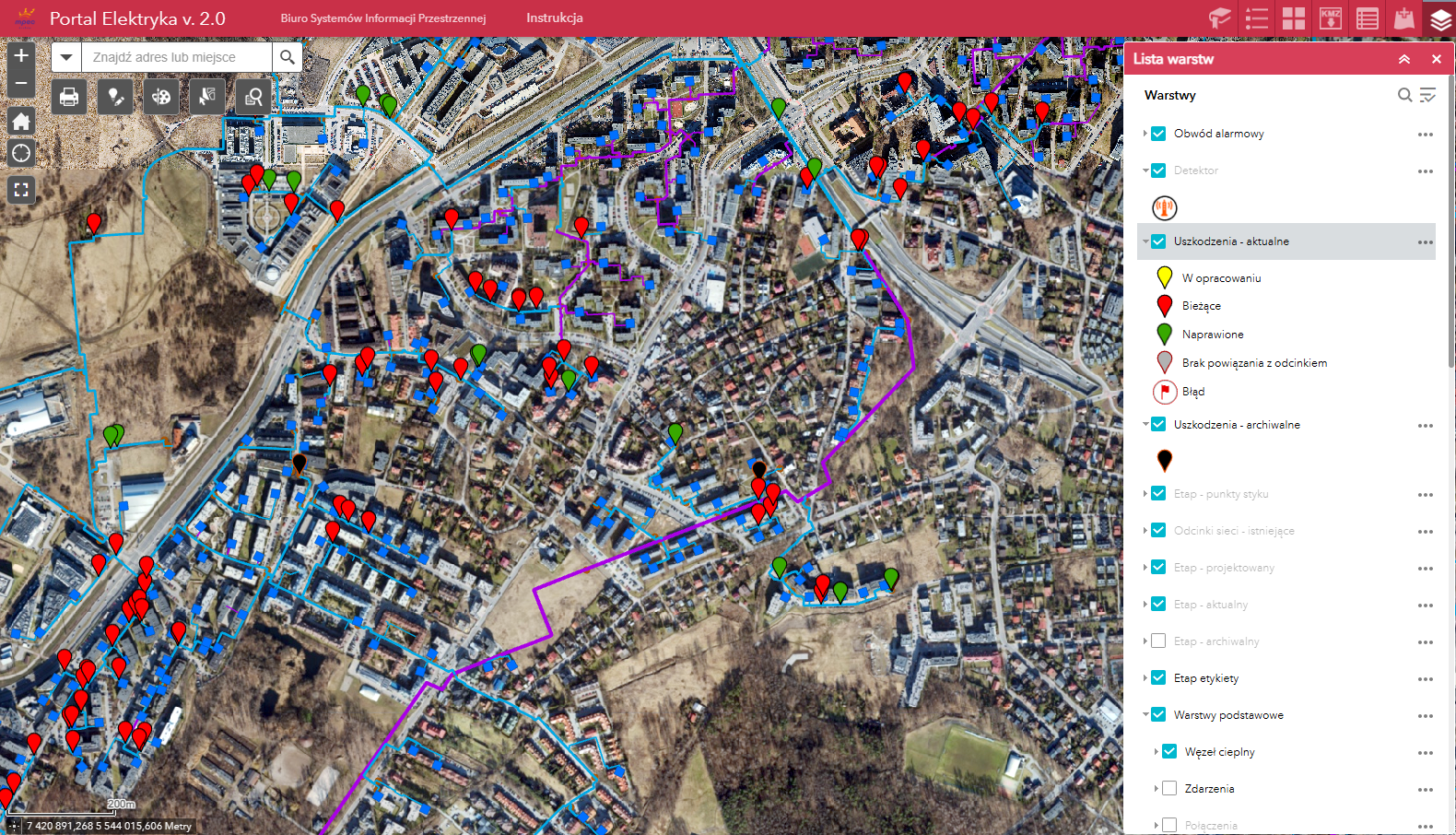
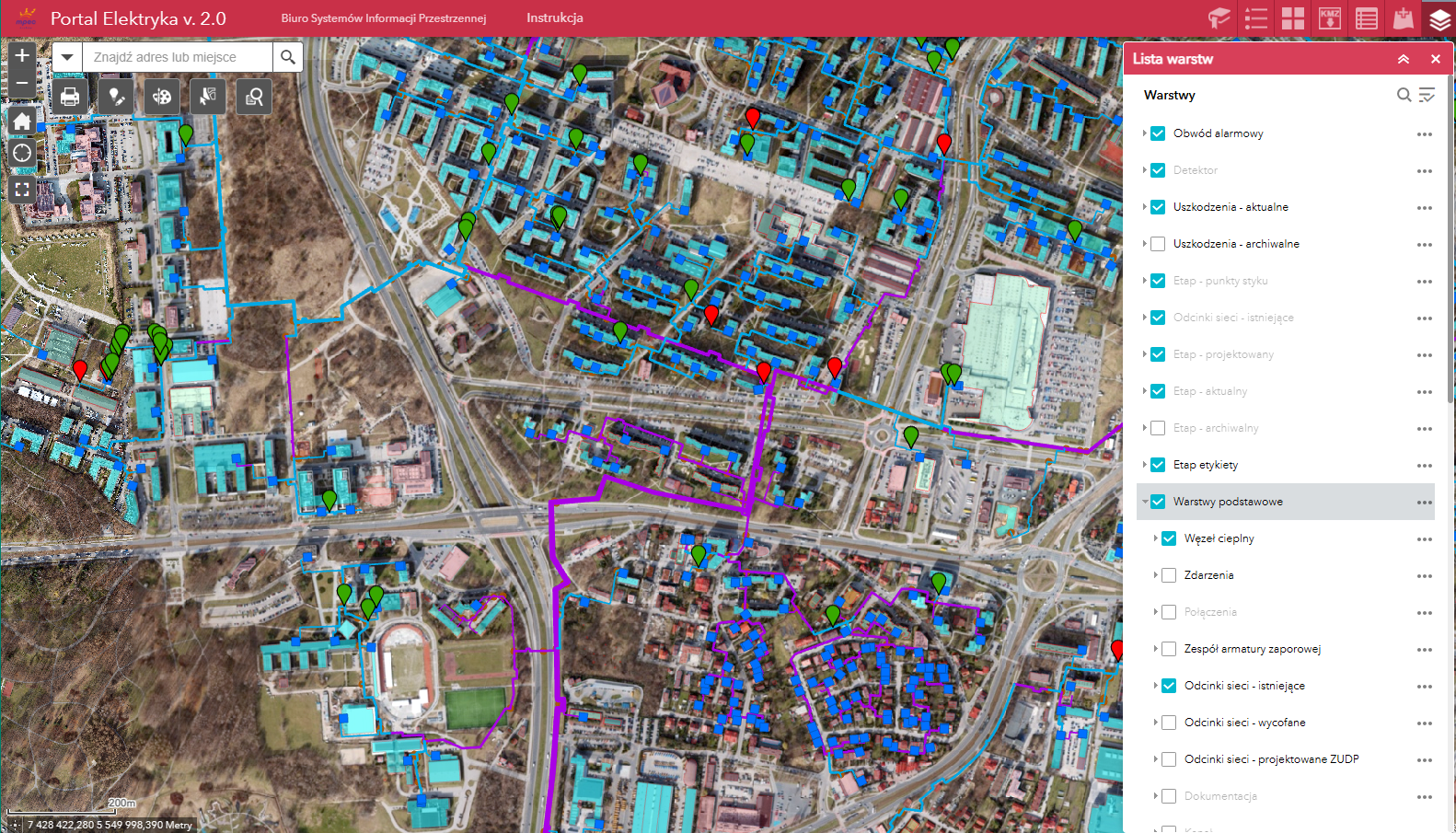
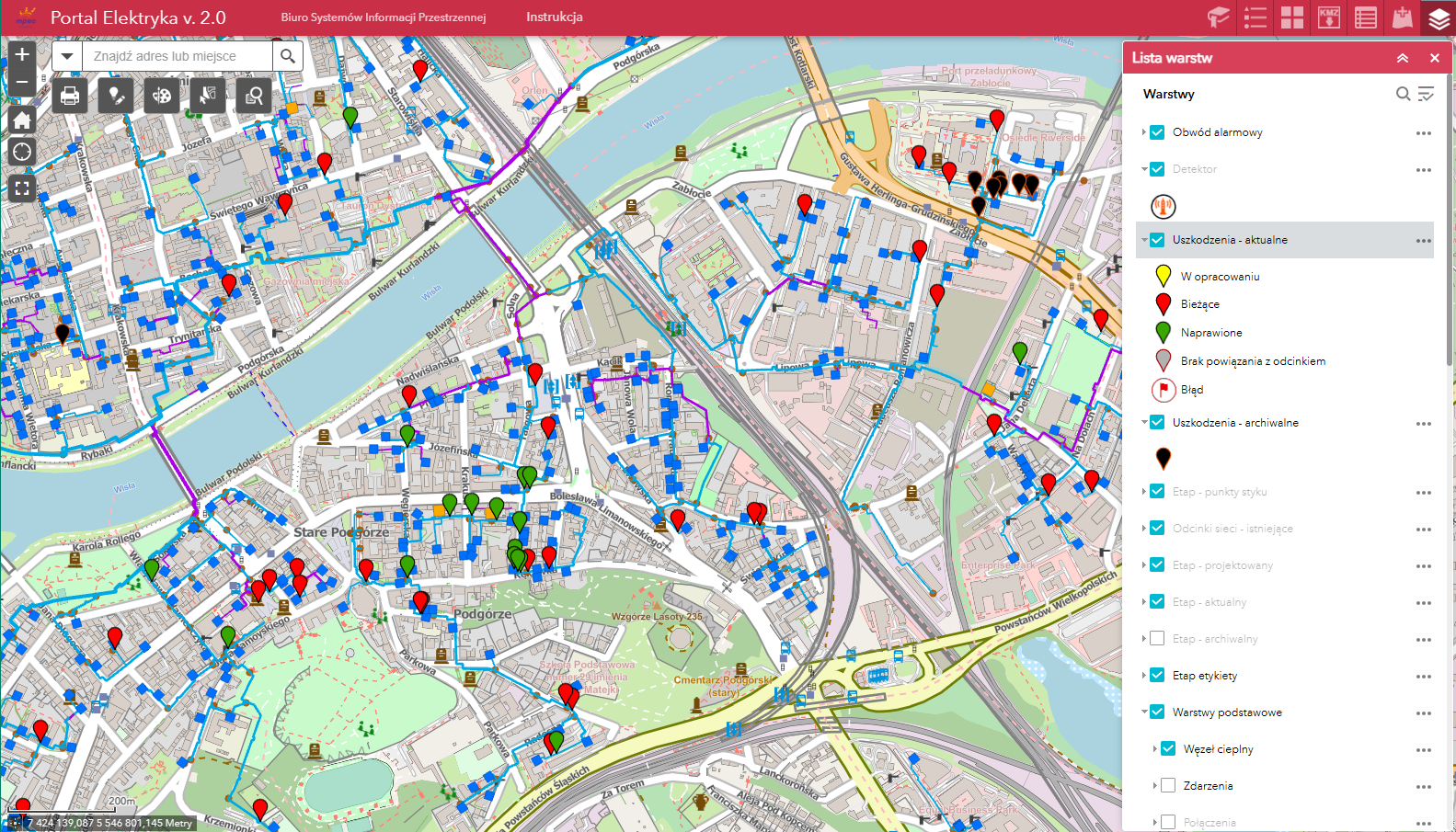
The Electrical Portal 2.0 has been enhanced with the ability to create and edit new object classes: Alarm Circuit, Detector, and Stage. These classes were designed along with the relationships linking them to each other and to the object classes already present in the previous version of the Electrical Portal.
As a result, the application is now better tailored to the needs of its dedicated user group, enabling, for example, the association of detectors with alarm circuits, the assignment of stage attributes to cable sections, and linking the Stage layer to records from the Stage Document table, with inheritance of specific attributes. The Electrical Portal 2.0 project also introduced data quality control procedures.
All these modifications were developed based on the Client’s experience with the previous version of the portal, and further refined through workshop sessions and ongoing collaboration between the Client and our team.